Ryukyu Kobujutsu in Hounslow.
Already enjoy Karate and want to take it further? Ryukyu Kobujutsu offers a new challenge, with authentic weapons study and plenty to discover. Learn new skills, explore distance and timing, and bring fresh understanding back to your Karate.
“I have found a fresh insight into the way I understand Karate.”
Ashok Banghar, Instructor · Shotokan Karate Organisation
Monday · 7:00–8:30 pm · Cranford Community College · Ages 16+, brown belt+ · £10 per regular class after your first lesson.
How to begin
Local or further away: find your route.
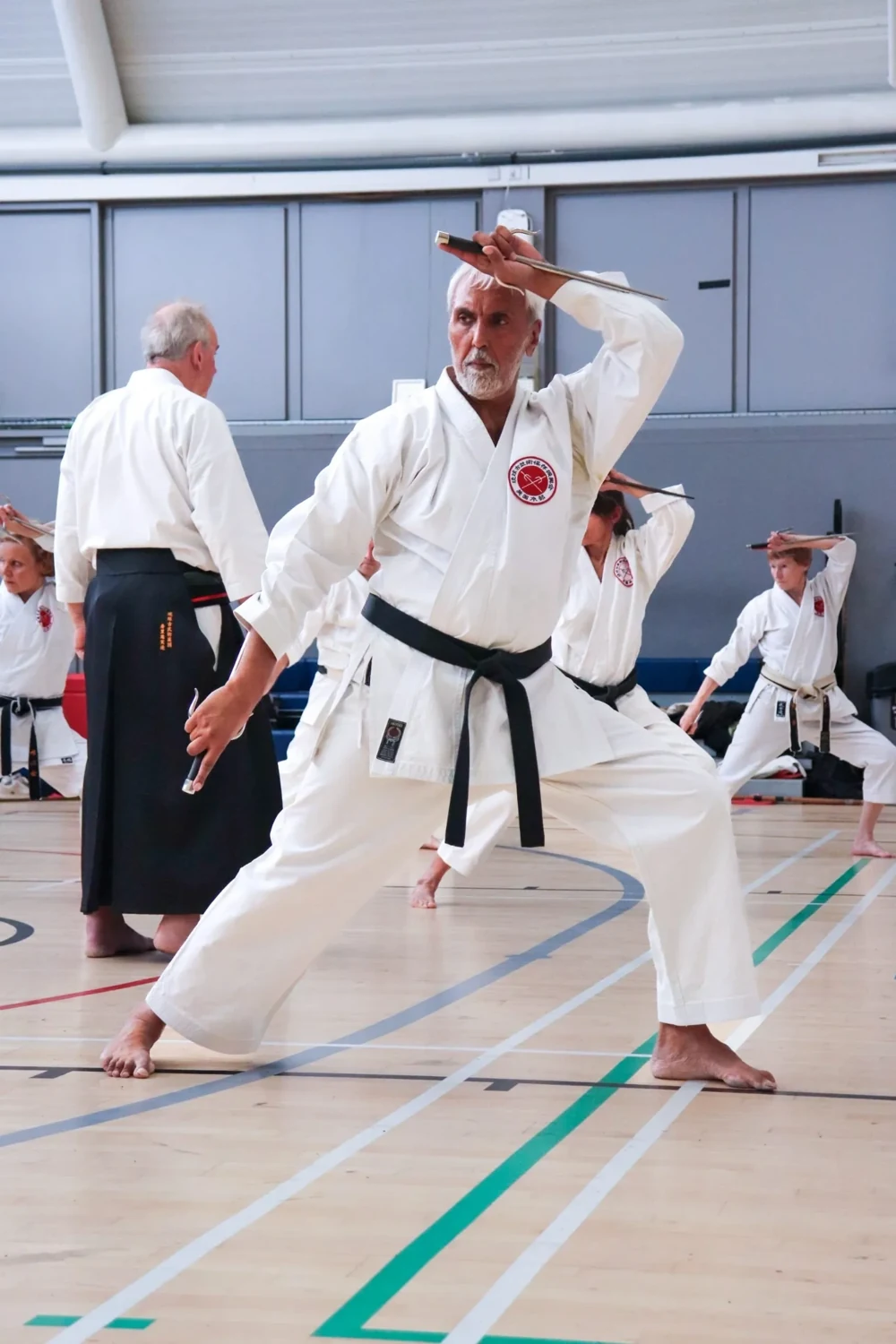
Join our weekly class, attend a course, ask about 1-to-1 teaching or learn online if you are not local. Instructors can also arrange a Kobujutsu introduction for their club.
Weekly class: ages 16+ and brown belt or above in a martial art. You can be completely new to weapons; we begin progressively with Bo. January course: a separate beginner route is available without the weekly brown belt requirement. Contact us to discuss which route suits you.
Why study Kobujutsu
When familiar skills meet a new challenge.
Make distance tangible
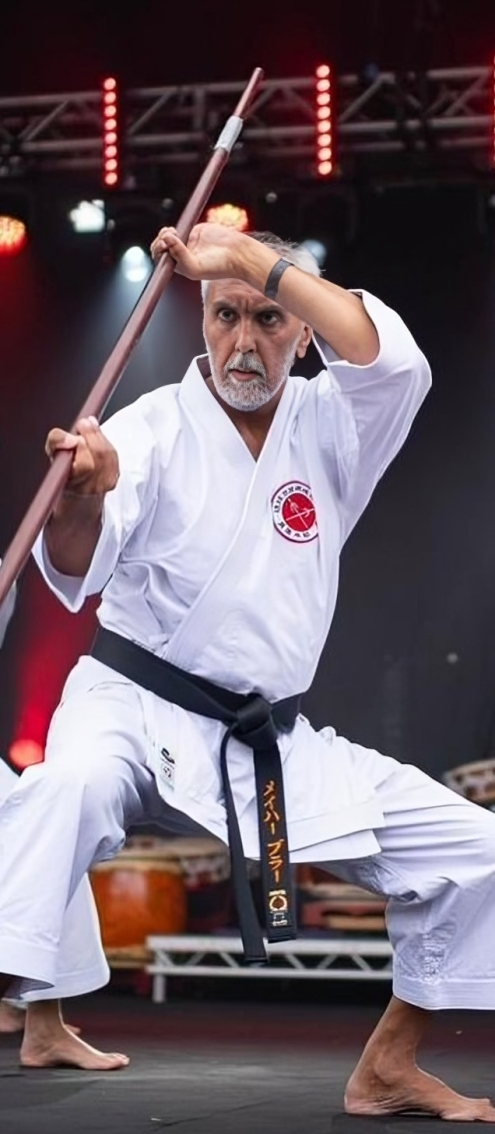
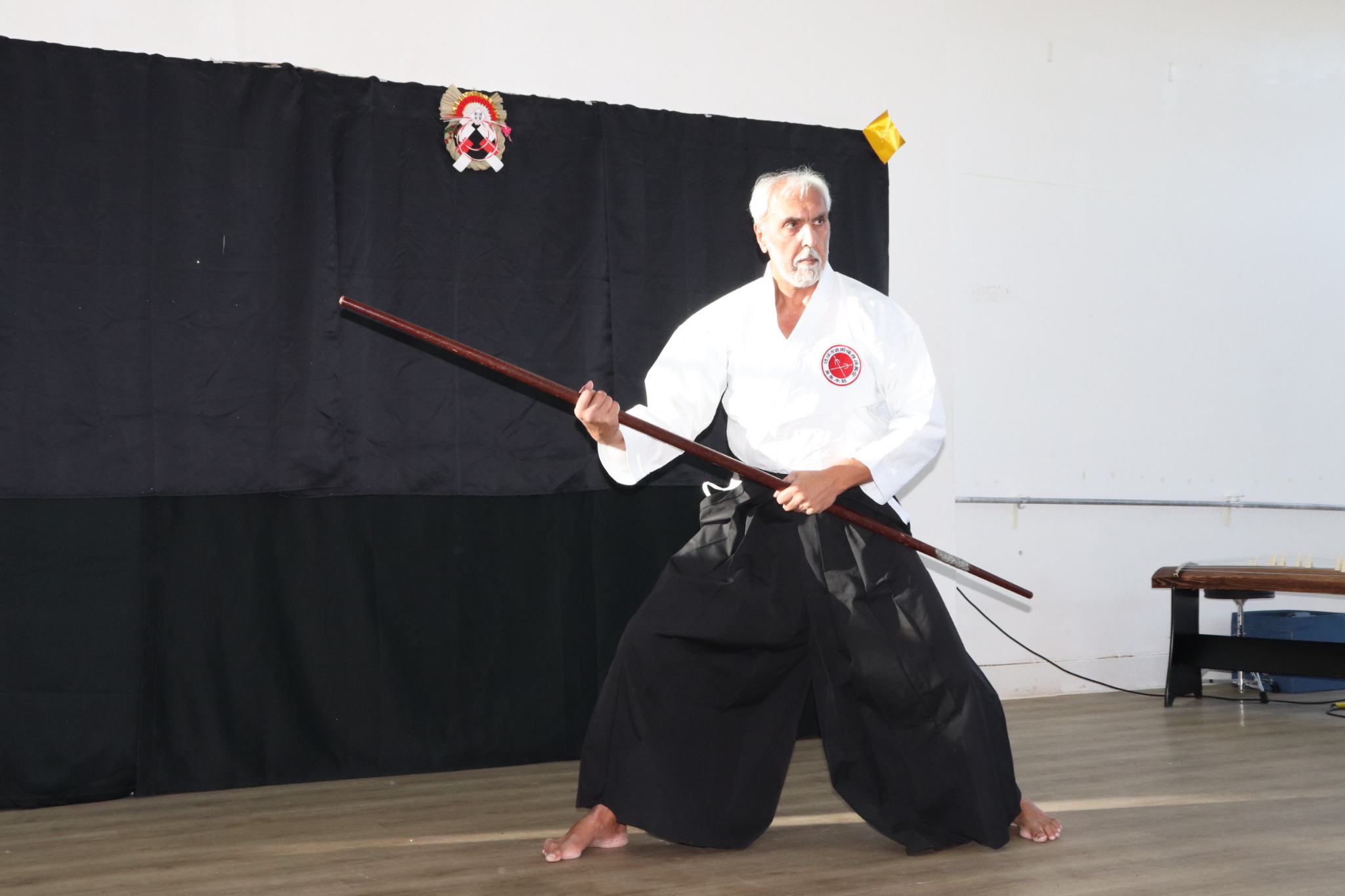
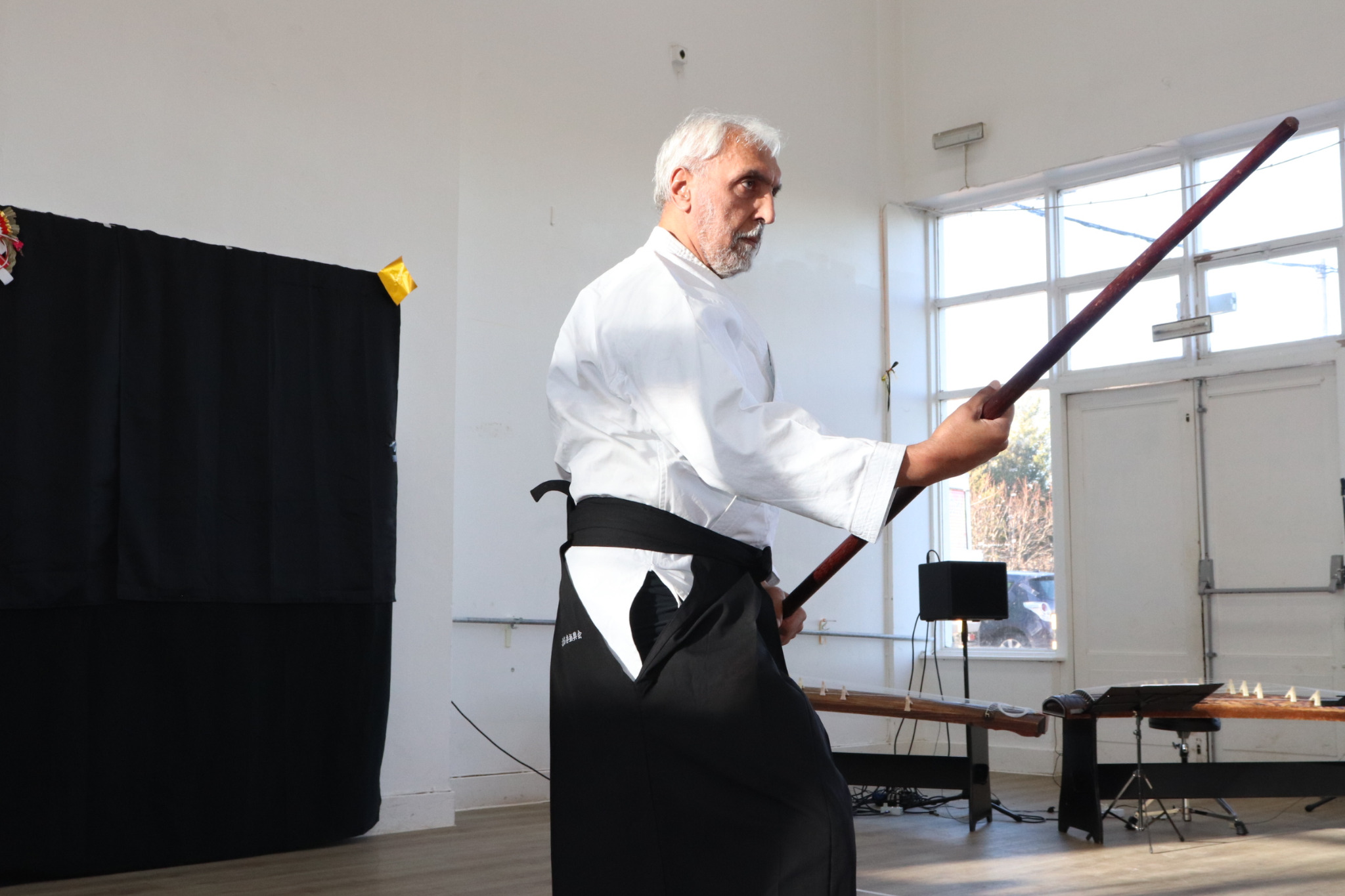
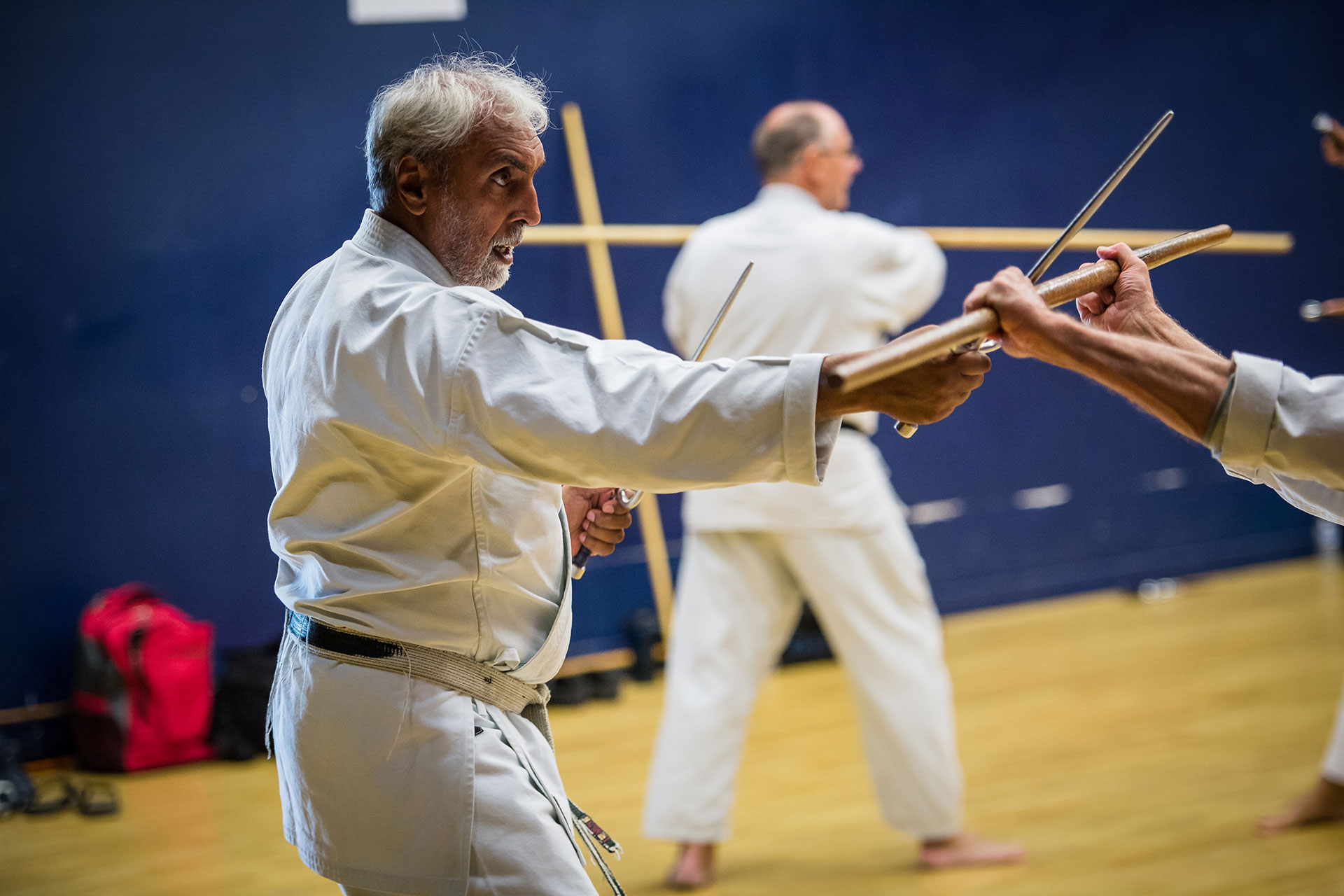
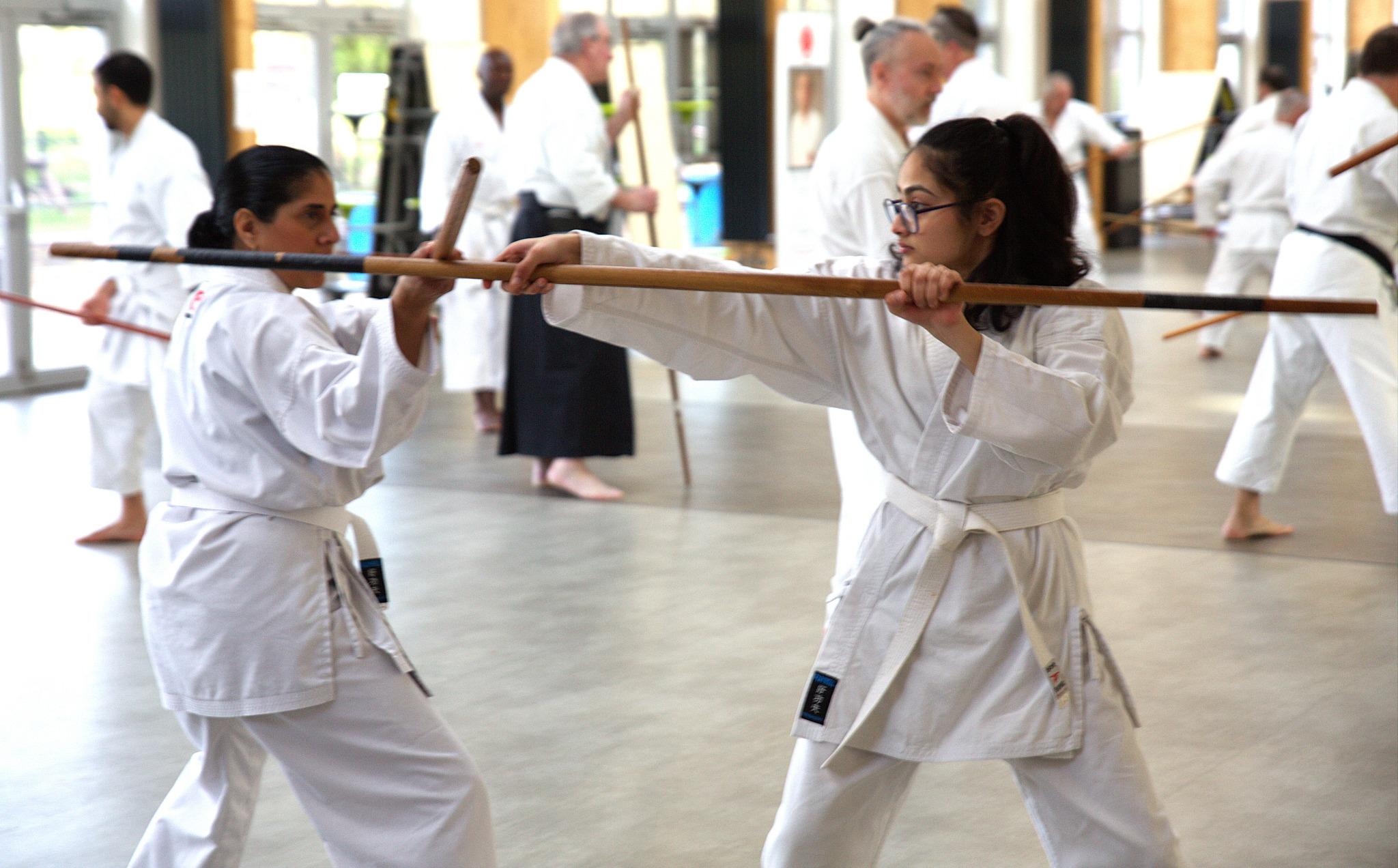
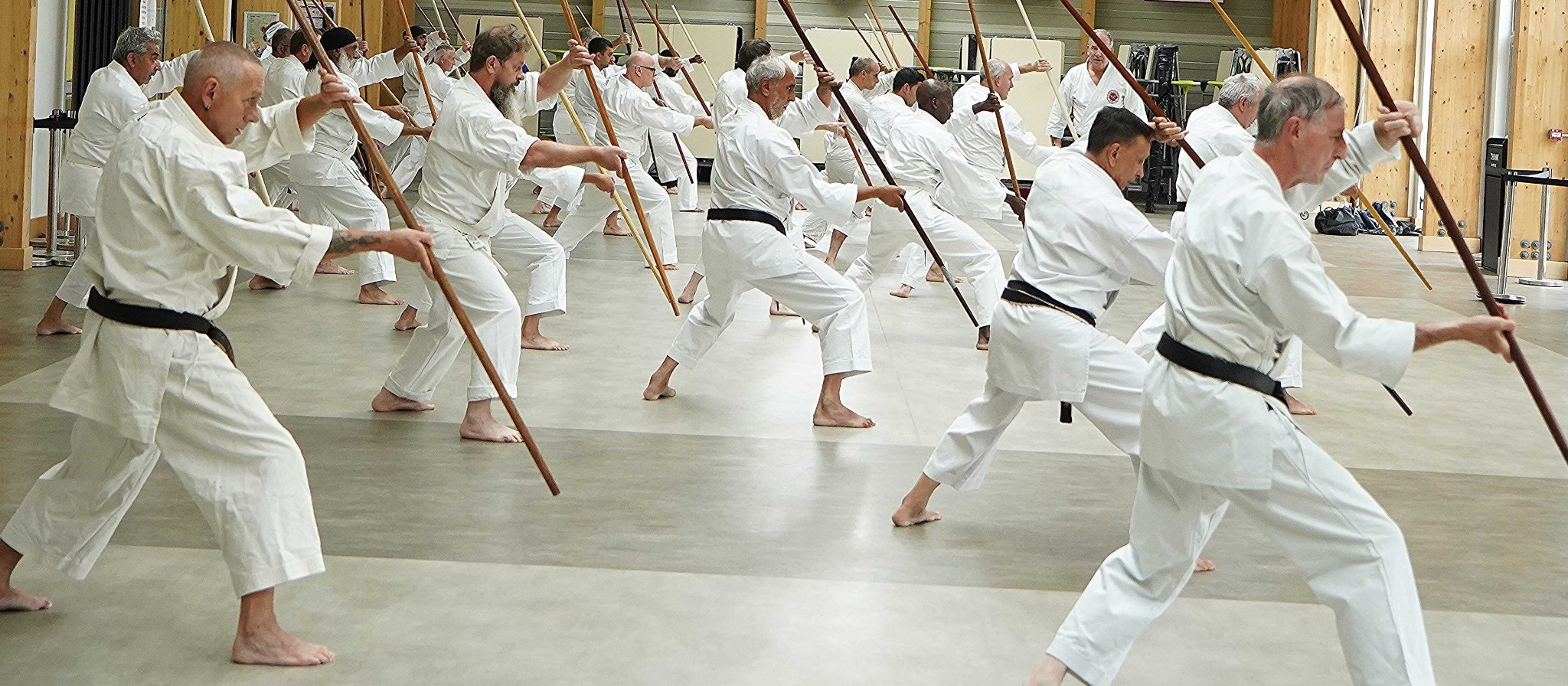
A Bo changes what you and a partner can reach. Footwork, angles and timing become immediate problems to solve through practice. You gain a fresh way to examine familiar Karate skills.
Develop real weapons skill
Build handling, coordination, posture and control through a structured syllabus. Kobujutsu has depth in its own right: the aim is skilled practice, not simply collecting weapon names or kata.
Reconnect with being a learner
Remember what it felt like to discover a new skill? Weapons study can bring that feeling back. Learn alongside other committed martial artists, ask questions and enjoy the moment an unfamiliar movement begins to make sense.
Bring insight back to Karate
Consider how your body generates movement, how you judge range and when you act. Weapons study gives you material to examine in your empty-hand practice, without replacing the art you already value.
Shared study
Precision grows through practice.
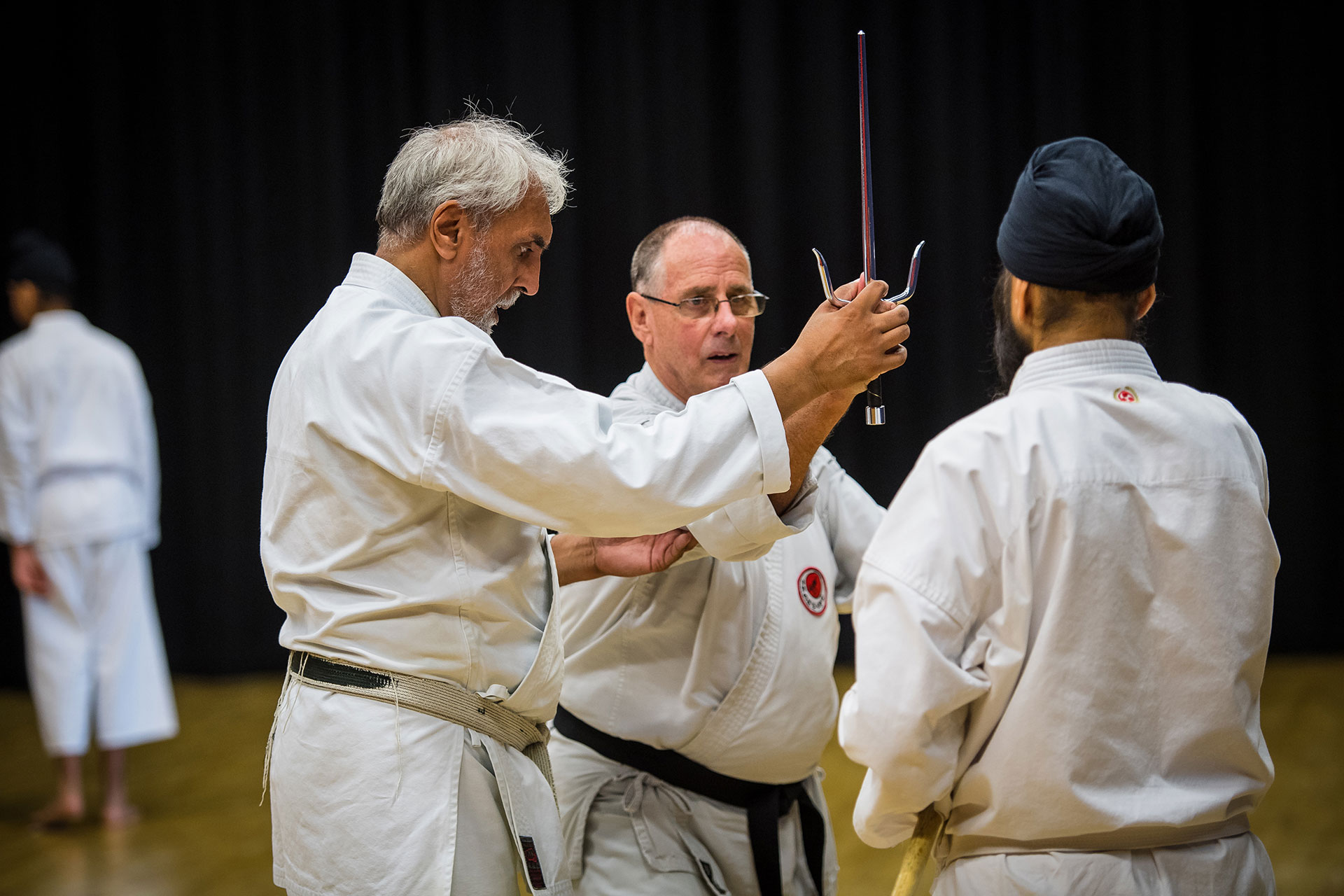
Learn the form, work with others and discover how small changes in movement affect the whole technique.
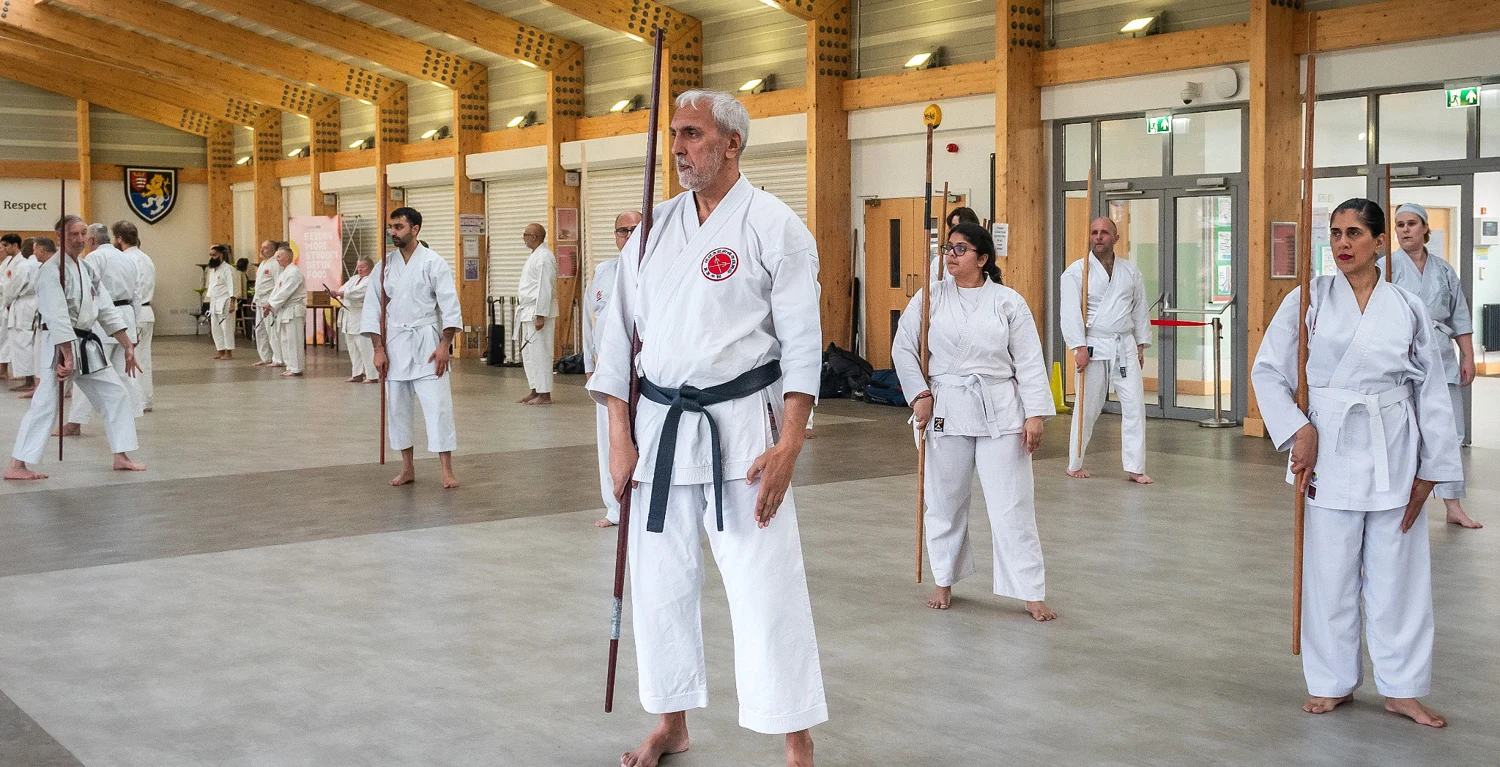
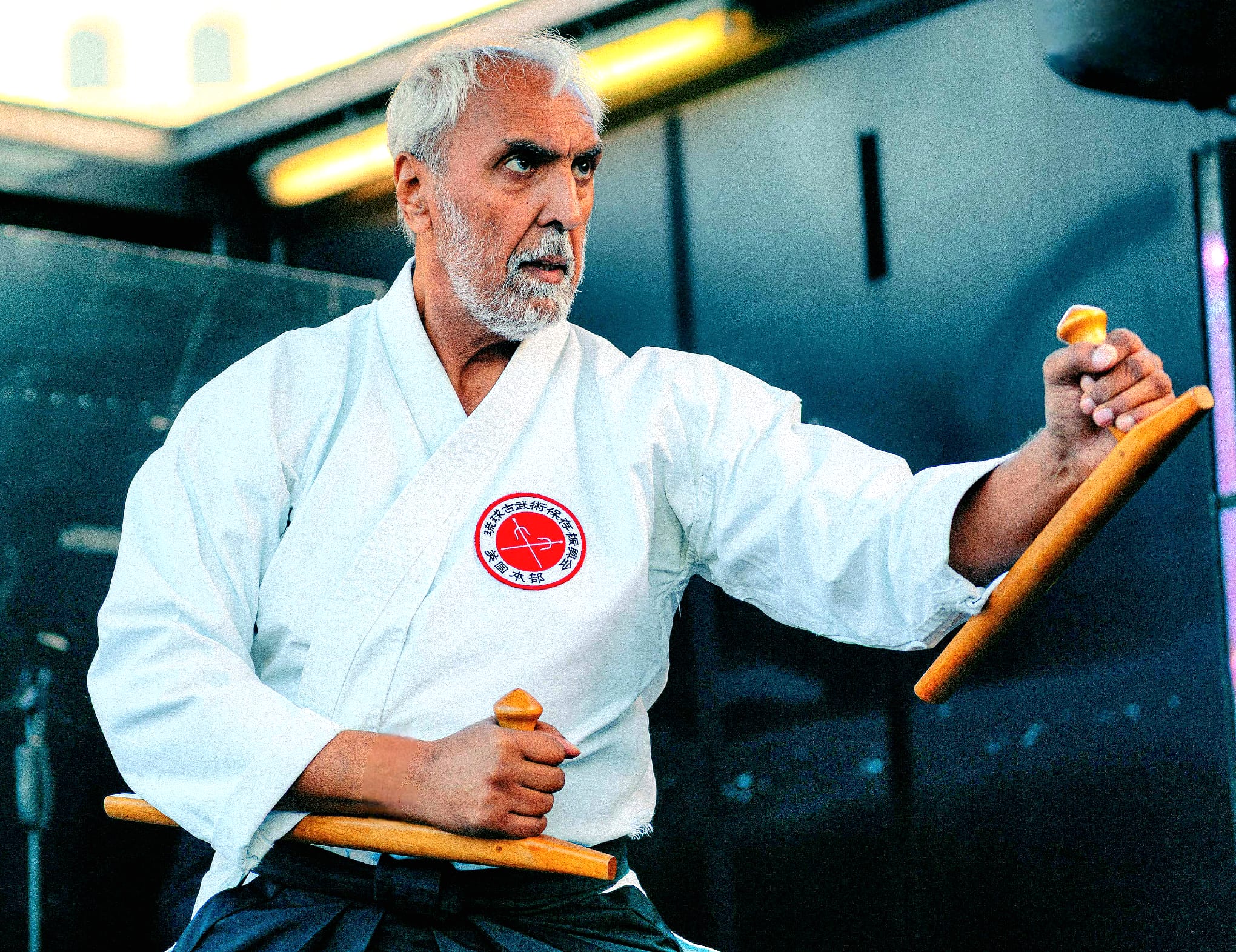
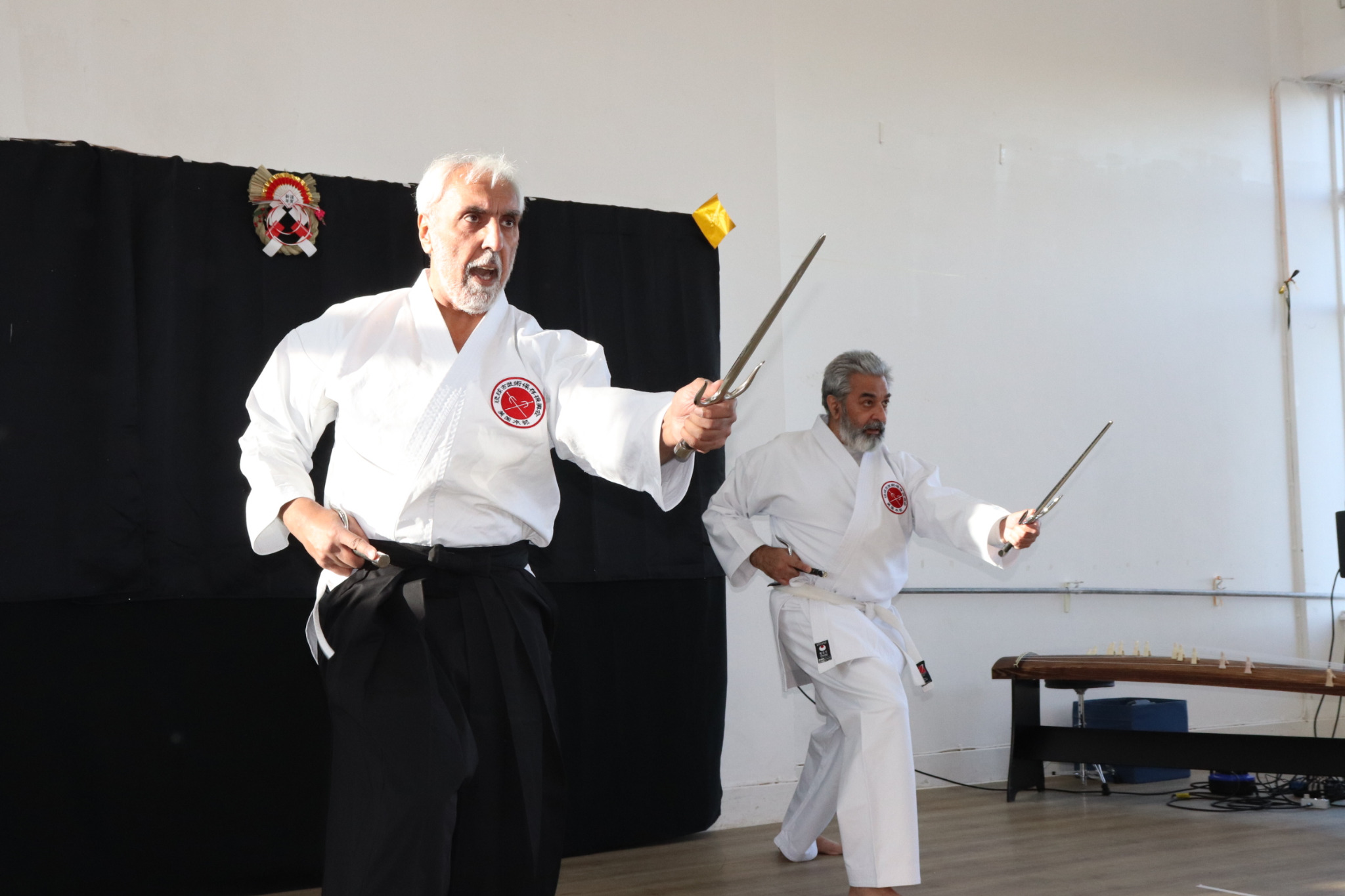
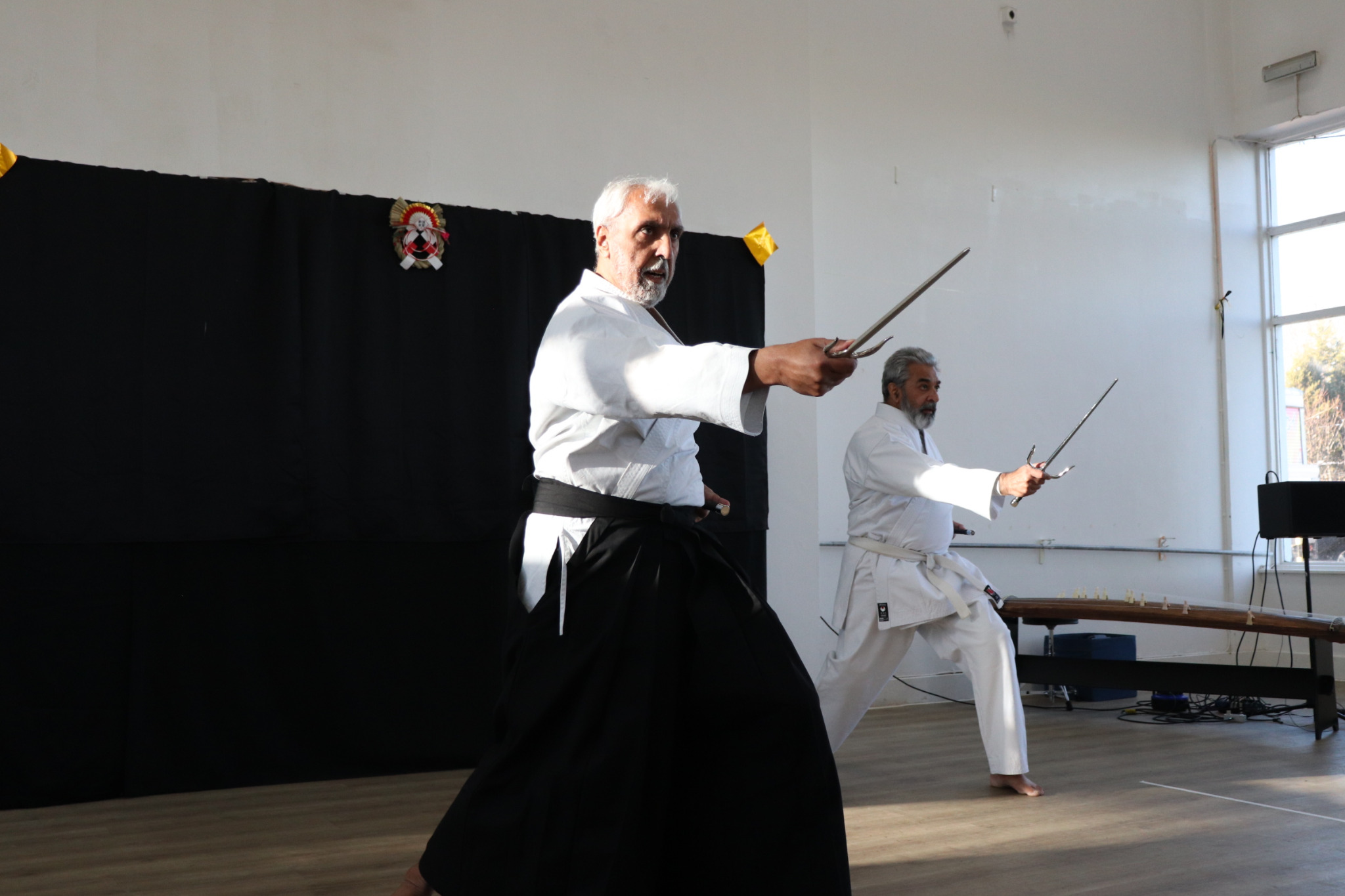
See more Bo, Sai and teaching photographs
What you learn
Eight weapons. One sustained study.
Ryukyu Kobujutsu is the traditional weapons art of the Ryukyu Islands, including Okinawa. Ichigokai’s syllabus covers Bo, Sai, Tonfa, Nunchaku, Kama, Tekko, Tinbe-Rochin and Surujin over time. The weapons are introduced through foundations, kata and partner work. Explore the official RKAGB syllabus.
You begin with manageable work and develop from there. Learning the form is a starting point; posture, handling, distance and application make the study deeper as you progress.
Why Ichigokai
Authenticity with a clear source.
Ichigokai is a member of the RKAGB. The teaching follows the tradition preserved by Taira Shinken and Motokatsu Inoue and passed on through Julian Mead Shihan. A clear source and a structured syllabus give your commitment a direction.
There’s time here to ask “why?”, try a correction and work carefully with a partner. You’ll meet people who value their Karate and share your wish to keep learning.
See the connections
What could weapons add to your Karate?
How weapons study improves your Karate
See how training with Bo can bring a fresh perspective to your Karate. A useful starting point if you’re wondering what weapons study could add to your practice.
Why body connection matters
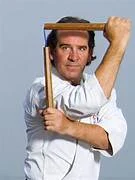
Explore body connection through Tonfa practice, and consider how the idea relates to the way you move in Karate.
Join the group
Start your weapons study.
Cranford Community College · High Street, Cranford, Hounslow TW5 9PD.
Message us before your first visit. We’ll confirm the next class, what to bring and how to find the training hall.
New to weapons? You’re welcome if you meet the weekly class requirements. Message us with your age, martial arts background and grade, and we’ll help you get started. Talk to us before buying equipment.
Arrange your free Kobujutsu lesson
New to weapons and outside the weekly eligibility? The January course offers a separate beginner route.
Before you join
Your questions, answered.
What is the difference between Karate and Kobujutsu?
Karate centres on empty-hand practice. Ryukyu Kobujutsu studies traditional weapons, including Bo, Sai and Tonfa. Both involve posture, movement, distance and timing; weapons change the range and handling you must understand.
Can I learn Kobujutsu without previous weapons experience?
Yes, if you meet the weekly class requirements: age 16+ and at least brown belt in a martial art. The January course also has a beginner route, without the weekly brown belt requirement.
Why study Bo if I already have a Karate black belt?
Bo gives an experienced karateka a new problem in range, angles and control. Familiar body movement must work with a longer implement and a partner. It offers both a distinct weapons skill and a fresh view of empty-hand practice.
Will weapons training compete with my Karate?
You can begin with one weekly session. Kobujutsu is an additional practice that lets you examine principles already important in Karate, while developing distinct weapons skills. Choose a commitment you can sustain.
Will I feel out of place as an instructor who is new to weapons?
Your experience matters, and you are not expected to know weapons already. Ichigokai gives senior practitioners room to learn foundations, ask questions and enjoy discovery again. The teaching respects your existing Karate.
What makes the teaching authentic, and what is its lineage?
Ichigokai is a member of the Ryukyu Kobujutsu Association of Great Britain (RKAGB). Our study follows the tradition preserved by Taira Shinken and Motokatsu Inoue, passed on through Julian Mead Shihan. Read about the lineage, Julian Mead Shihan and RKAGB.
Will I learn a complete system?
You can work progressively through a structured Ryukyu Kobujutsu syllabus, rather than learn isolated demonstrations. Learning the complete system takes sustained study and regular practice. An afternoon course focuses on selected material and gives you a useful next step; it does not teach the whole system in one session.
What does the training cover?
Training brings together foundations, kata, kumite and applications. Foundations develop posture, handling and movement; kata organises techniques into forms; kumite develops distance, timing and control with a partner; applications explore how the techniques work. The material is selected to suit the course and your experience.
Our Kobujutsu association
Ryukyu Kobujutsu Association of Great Britain
Ichigokai is a member of the RKAGB. Our weapons study follows a structured tradition through Taira Shinken, Motokatsu Inoue and Julian Mead Shihan.